Curatorial Note
A linearity holds our archival imaginary hostage: time (and memory) is often presupposed to be sequential, (pre)determined, calendrical – and thus contained inside records that appear stable. Such documents claim a material authenticity: dissolved of doubt, hesitation, emotion, or any recursive movement. Fraught landscapes are flattened into abstracted statistics, as historical time accrues in the form of a ‘memorial’. Here, data collates and multiplies to no definite end; an ‘archive fever’ now subsumes our contemporary discourse. But if we take a step back, can such a linear apparatus truly harbour the weight of memory, or capture the movement of time? Put differently, can temporality be restricted to a linear chronology? Is our relation to the past – with our flawed, incomplete subjectivities – itself an objective phenomenon? For even if we remember (or document) with precision, historical narratives tend to slip, mutate, or turn delinquent – at times, morphing to strengthen the agenda of hegemonic regimes.
At this tenuous impasse, could a perspectival shift – a squint, a twist, or a slant of sorts – open up a newer way of seeing and capturing time, to revive its radical historicity? What might this look like? Marking a departure from linearity, Walter Benjamin once likened a historian to a storyteller: where grasping the past does not mean reconstructing it “the way it really was” back then, but rather, reckoning with its disjointed temporal remnants in our contemporary – to capture a “memory as it flashes up in a moment of danger.” Time is split, transient, and urgent – untethered from the calendar. How might memory collect (and archive) such a fleeting temporality, and more importantly, what are the political stakes of these conceptual movements? Resisting a positivist approach, this exhibition proposes a subtractive twist into our archival imaginary: each artwork takes a slant, piercing into our hitherto stagnant temporality; and at this unsettling edge, one encounters the gaps, slippages, absences, and contingencies immanent in the making (and re-making) of history. Each narrative necessitates an unlearning of the present in order to grasp the past.
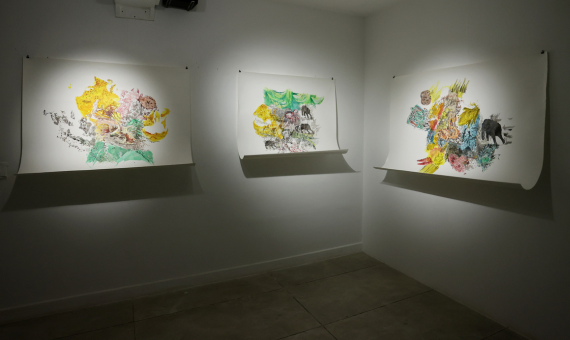
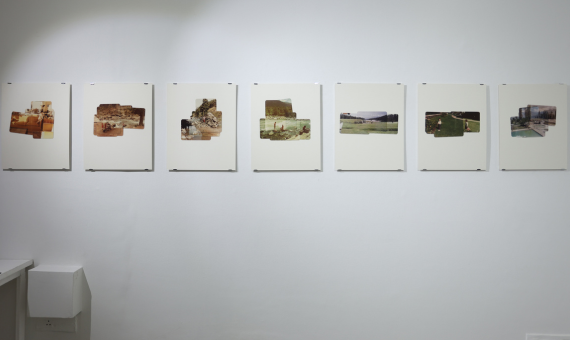
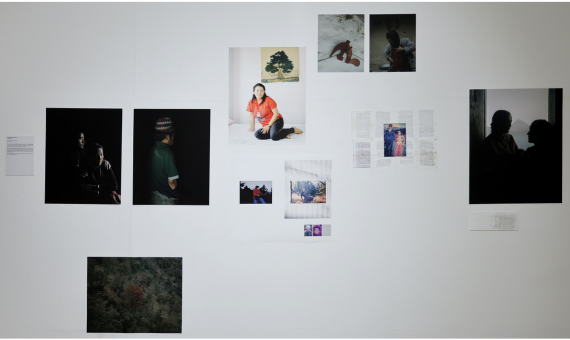
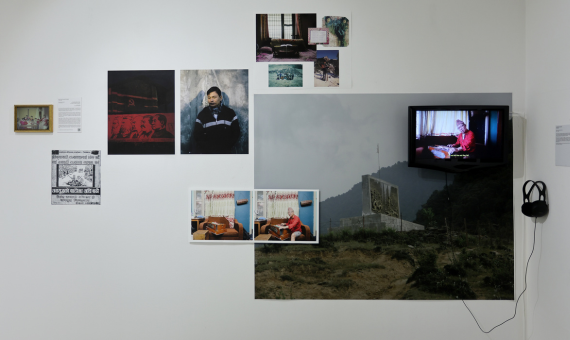
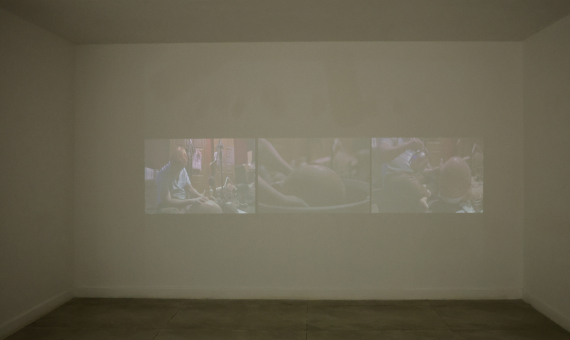
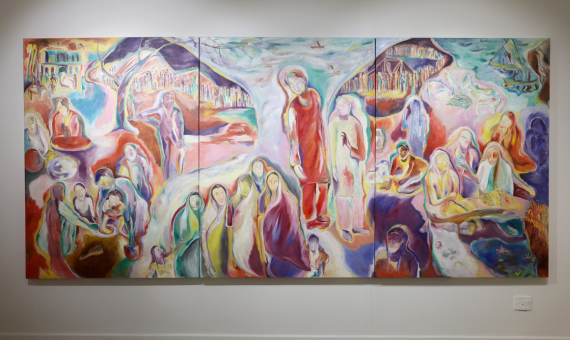
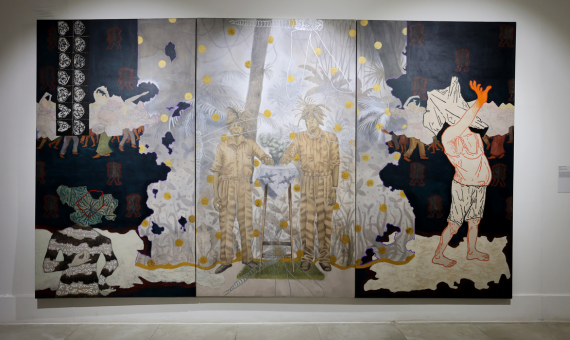
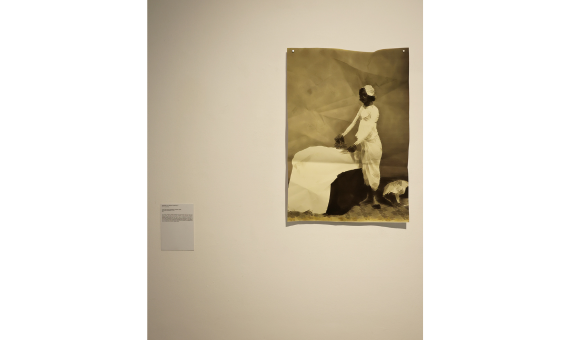
Fiction and phantoms no longer dilute an ‘objective’ truth, but rather, become portals to grasp our unspoken desires, unrealised dreams, and the inscrutable (yet inexhaustible) core of language. As memory sheds any façade of objectivity – the canonical ‘unstained’ knowledge – you encounter the ruins of time, a structural exoskeleton that bears the imprint of potential, the conditions of possibility to create anew. Out here, viewers confront family archives that index an ode to forgetfulness; phantoms of abandoned archives that return in spectral formations, interrupting the present; tense slippages between aural, visual, and textual registers of silent testimonies that tremble cartographic lines; a long Partition’s fearful relation to belonging, resisting temporal frameworks; the symbolic (and sonic) remnants of a forgotten revolution in Nepal; and the outtakes of a film from the 1980s, resurrected into a haunting ghost-like spectre of sectarian violence. These juxtapositions render our ordinary ground estranged, unstable, and on the move. In short-circuiting our archival imaginary, this exhibition is an experiment: to create speculative nodes where the tropes of memory can be reconfigured. From more than a century ago, Emily Dickinson’s words become our manifesto: “Tell all the truth but tell it slant.”